Instant Quote for Obsolete & Hard-to-Find Components
Struggling with EOL parts or a "Line Down" situation? Get a response from our global sourcing team in less than 24 hours.
Why Trust Nantian Electronics?
ISO9001:2015 / 14001 / 45001
Our triple ISO certifications and Dun & Bradstreet verification ensure the highest level of supply chain integrity and operational safety.
What Are Obsolete Electronic Components?
In the fast-paced world of hardware manufacturing, "obsolete" doesn't necessarily mean "broken" or "useless." It simply means the Original Equipment Manufacturer (OEM) no longer produces or supports the part.
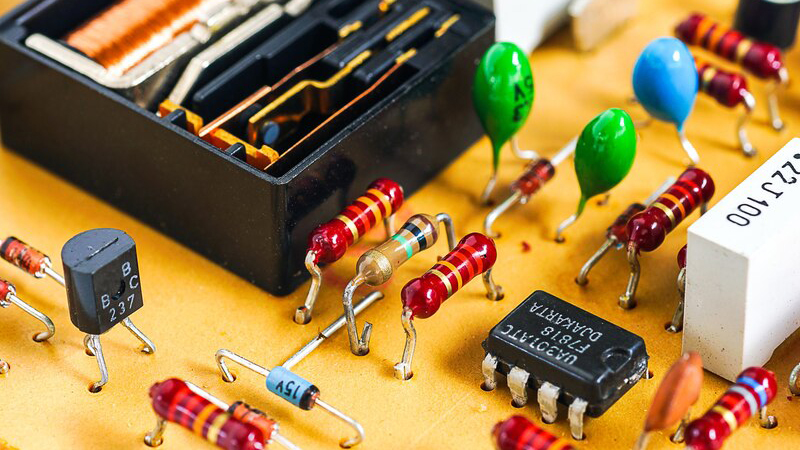
When a component is flagged as EOL (End of Life), it’s a formal signal that the clock is ticking. For a procurement manager, this is the "red alert" moment. Once the remaining factory stock is gone, you can no longer buy it through standard, franchised channels. You are officially entering the "Open Market."
Understanding EOL vs. Obsolete
EOL (End of Life): The transitional phase. The manufacturer issues a PDN (Product Discontinuation Notice), giving customers a final window to place a "Last Time Buy."
Obsolete: The final stage. Production has ceased, technical support is unavailable, and the part is no longer found in any authorized distributor’s catalog.
Active vs. Passive Components: Why Their Obsolescence Hits Differently
Not all components are created equal when it comes to their "expiration date." Understanding whether your missing part is Active or Passive will dictate your entire sourcing strategy.
| Feature | Active Components (ICs, Transistors, CPUs) | Passive Components (Resistors, Capacitors, Inductors) |
|---|
| Complexity | High (Integrated circuits, logic gates) | Low (Store or limit energy) |
| Obsolescence Speed | Very Fast. Driven by Moore’s Law and the race for smaller, faster chips. | Slow. Designs remain stable for decades. |
| Why they go EOL? | The fabrication process (Wafer size) becomes outdated or the manufacturer merges. | Shift in market demand (e.g., moving from large 1206 packages to tiny 0201 sizes). |
| Replacement Difficulty | Extreme. Finding a "drop-in" replacement for a custom IC is nearly impossible without a board redesign. | Moderate. You can often find a similar value/tolerance from a different brand. |
The "Active" Nightmare
Active components are the "brains" of your PCB. When a microcontroller goes obsolete, it’s not just about the hardware; it’s about the firmware and software tied to it. Replacing an obsolete active component often triggers a domino effect of re-testing, re-certification, and code rewriting.
The "Passive" Shift
Passive components are the "infrastructure." They don’t go obsolete because the technology fails, but because the manufacturing efficiency changes. For example, as the industry moves toward miniaturization, manufacturers stop making larger case sizes because they can't sell enough volume to keep the production line profitable.
Pro Tip: Don't wait for the "Obsolete" status. If you see an NRND (Not Recommended for New Designs) tag on a supplier's website, treat it as a pre-EOL warning. Start looking for alternatives now.
Why Do Electronic Components Go Obsolete?
In an ideal world, every component integrated into a design would be available for the entire lifespan of the finished product. However, for those of us working in sectors like aerospace, rail, or medical electronics, the reality is far more challenging. Component obsolescence is rarely a matter of "bad luck"; rather, it is the inevitable byproduct of a rapidly evolving global market.
Understanding the "why" behind obsolescence is the first step toward effective mitigation. Here are the primary drivers shifting parts from "Active" to "Obsolete."
The Relentless March of Moore’s Law
At the heart of the electronics industry lies the drive for miniaturisation and increased performance. Moore’s Law—the observation that the number of transistors on a microchip doubles roughly every two years—means that semiconductor fabrication processes are in a constant state of flux.
When a silicon wafer foundry upgrades its equipment to support smaller nanometre processes, they often decommission the older "legacy" lines. For the manufacturer, maintaining an old production line for a low-volume, 10-year-old chip simply doesn't make commercial sense when they could be using that floor space for the latest high-margin processors.
Environmental Legislation
Legislative changes, particularly within the UK and the EU, have a profound impact on component longevity. The introduction of RoHS (Restriction of Hazardous Substances) was a watershed moment, rendering thousands of leaded components obsolete overnight.
Even today, evolving REACH regulations and the push for "green" electronics mean that if a specific chemical or flame retardant used in a component’s packaging is banned, the manufacturer may choose to EOL the entire part rather than re-engineer the materials.
Commercial Consolidation: M&A and Profit Margins
The semiconductor landscape is notorious for aggressive Mergers and Acquisitions (M&A). When one Tier-1 manufacturer acquires another, they inevitably "rationalise" their combined portfolio. If two companies both produce a similar voltage regulator, the one with the lower profit margin is usually the first to be axed.
Furthermore, if a component's sales volume drops below a certain "economic threshold," the manufacturer will issue a Discontinuation Notice simply to protect their bottom line, regardless of how many legacy systems still rely on it.
The Lifecycle Paradox: A Tale of Two Timelines
The most significant headache for British engineers is the "Lifecycle Mismatch." This is the fundamental gap between how long a product is expected to last in the field versus how long its internal components remain in production.
Consumer Tech (The "Fast" Lifecycle): A smartphone or consumer tablet has a design-to-disposal life of perhaps 2–4 years. The components inside are designed for this "sprint."
Industrial & Infrastructure (The "Long" Lifecycle): In contrast, a bespoke medical imaging suite or an avionics system for the aerospace sector is expected to remain operational for 15, 20, or even 30 years.
The Critical Gap: > It is not uncommon for a high-reliability industrial project to spend 3 to 5 years in the "Design and Certification" phase alone. By the time the first unit rolls off the assembly line, the core integrated circuits (ICs) chosen at the start of the project may already be nearing their Last Time Buy (LTB) date.
This misalignment creates a permanent state of "Obsolescence Management" for procurement teams, where they are constantly forced to find solutions for parts that have outlived their original manufacturing run.
The Hidden Risks of Obsolete Components in Your Supply Chain
Navigating the "End of Life" landscape isn't just a procurement hurdle; it’s a high-stakes gamble with your company's bottom line and reputation. When a part goes obsolete, two primary risks immediately threaten your operations.
The "Line Down" Crisis: The 1% Problem
In electronics manufacturing, the strength of your entire production run is dictated by its weakest link. It doesn't matter if you have 99% of your Bill of Materials (BOM) sitting in the warehouse; if a single obsolete transistor is missing, your PCBA (Printed Circuit Board Assembly) cannot be completed.
Financial Haemorrhage: A "line down" situation is incredibly costly. You are paying for factory overheads, labour, and "Work in Progress" (WIP) inventory that cannot be shipped or invoiced.
Contractual Penalties: For many UK and EU manufacturers, failing to meet delivery dates for Tier-1 clients often triggers heavy financial penalties and damages long-term trust.
The Counterfeit Minefield: A Grey Market Reality
When the franchised supply chain runs dry, many buyers turn to the "Open Market" or independent brokers. This is where the risk of counterfeit and substandard parts skyrockets. Obsolete components are the #1 target for fraudsters for a simple reason: High demand + Zero official supply = High profit margins for criminals.
Refurbished as New: Scrappers often harvest old chips from "e-waste," sand off the original markings (black-topping), and laser-etch new date codes to sell them as "new and unused."
The Reliability Time Bomb: These parts might pass a basic power-on test but fail catastrophically in the field due to thermal stress or internal corrosion.
Ghost Parts: In some cases, the package is empty or contains a completely different silicon die that doesn't match the datasheet, leading to immediate circuit failure.
The Verdict: If you are sourcing obsolete parts from unverified sources to avoid a line down, you may simply be trading a delivery delay for a catastrophic product recall.
How to Source Hard-to-Find and Discontinued Parts
When the standard supply chain fails, procurement shifts from "routine ordering" to "strategic sourcing." To secure obsolete components without compromising your product’s integrity, you must navigate three distinct tiers of the market.

1. Franchised Distributors: The "Residual Stock" Search
Before venturing into the open market, your first port of call should always be the authorised (franchised) network. While they stop stocking parts once they are officially discontinued, they often hold residual stock or "factory leftovers."
The Advantage: Full traceability (CoC - Certificate of Conformance) and zero risk of counterfeits.
The Strategy: Use global inventory aggregators to check if any franchised branch globally—from the UK to Singapore—still has "shelf stock" available.
2. Authorised Aftermarket Manufacturers: The Gold Standard
For long-term projects (such as rail or defence), the most reliable solution is often an Authorised Aftermarket Manufacturer like Rochester Electronics or Lansdale Semiconductor.
How it works: These firms partner with original manufacturers (like Intel, TI, or NXP) to buy their remaining wafer stock, die, and even the original tooling and IP.
The Result: They can continue to manufacture the "obsolete" part to the original specifications for years, or even decades, after the original fab has closed. This is the only way to get a "new" discontinued part with the original manufacturer’s blessing.
3. Independent Distributors: Navigating the Open Market
If neither of the above options yields results, you must enter the Open Market. This involves buying from independent distributors who source stock from OEM excess, other manufacturers, or global inventories.
Risk Management: This is where you must exercise extreme caution. Only deal with distributors who hold industry-recognised certifications such as AS9120 (Aerospace) or ISO 9001.
The "Vet" Factor: A reputable UK independent distributor will have a rigorous vetting process, often using third-party test houses to verify that the "obsolete" parts are genuine before they ever reach your assembly line.
Expert Insight: Never buy on price alone when sourcing obsolete parts. If a "hard-to-find" chip is priced significantly lower than its original MSRP, it is almost certainly a counterfeit.
Franchised vs. Independent Distributors: What’s the Difference?
In the world of electronics manufacturing, the choice between a franchised and an independent distributor is often a choice between guaranteed lineage and sourcing agility. An authorised (franchised) distributor acts as a direct extension of the manufacturer, offering absolute traceability with a clean paper trail (Certificate of Conformance) from the factory floor to your warehouse. While this provides the highest level of security for active components, franchised partners are famously rigid; once a part hits "obsolete" status and their shelves are bare, their role in your supply chain effectively ends. They operate on fixed lead times and have little room to manoeuvre when a component is no longer in official production.
In contrast, independent distributors function as global scouts, providing the essential flexibility needed to keep legacy production lines running. Because they are not bound by restrictive manufacturer contracts, they can source "ex-stock" from across the global open market, often locating discontinued parts within days that a franchised partner would simply mark as "unavailable." However, this speed and flexibility come with a different responsibility: the buyer must trade the automated traceability of the franchised route for a rigorous quality-vetting process. For UK firms managing long-term projects, the franchised route is the standard for new designs, but the independent distributor is the indispensable "emergency service" for managing the realities of obsolescence.
Strategies for Effective Obsolescence Management
In the electronics industry, being reactive is expensive. To maintain a stable production cycle, companies must move from "firefighting" to a proactive obsolescence management strategy. By planning for a part’s eventual disappearance, you can avoid costly redesigns and production halts.
PCN and PDN Monitoring: Your Early Warning System
Manufacturers do not stop producing components without warning. They communicate through official documents known as Product Change Notifications (PCN) and Product Discontinuation Notices (PDN).
How it works: You must actively track the lifecycle of every critical component on your Bill of Materials (BOM). Many global firms use automated database tools like SiliconExpert or IHS Markit to receive real-time alerts when a manufacturer flags a part as Not Recommended for New Designs (NRND).
The Goal: The objective is to secure a 6 to 12-month lead time before a part becomes completely unavailable. This window allows your procurement and engineering teams to make informed decisions before the stock dries up.
Mastering the Last Time Buy
When a manufacturer issues a PDN, they provide a specific deadline known as the Last Time Buy (LTB) date. This is your final opportunity to purchase the component directly from the factory or an authorized distributor.
Strategic Stocking: An LTB is a calculated "inventory grab" intended to cover the remaining lifespan of your product.
Calculating Your Volume: This requires a careful balance. Ordering too little leads to a production crash; ordering too much ties up valuable capital in dead stock.
The LTB Formula: To find your required quantity, multiply your Annual Usage by the number of Remaining Product Years, then add a Safety Buffer of 10 to 20 percent to account for unexpected repairs or spikes in demand.
Finding Alternatives: The FFF Standard
If a Last Time Buy is not financially feasible, you must find a "Cross-Reference" or an alternative part. The goal is to find a component that meets the FFF criteria:
Form: Does the component physically fit on the existing PCB footprint and match the dimensions?
Fit: Are the pinouts, electrical connections, and voltage requirements identical to the original?
Function: Does the component perform the exact same electronic task without requiring changes to the software, firmware, or surrounding circuitry?
The Redesign Reality: If a Form, Fit, and Function (FFF) alternative cannot be found, your engineering team must prepare for a minor redesign. While a redesign requires an upfront investment, it is often a safer long-term strategy than relying on high-risk grey market stock for years to come.
How to Ensure Quality and Avoid Counterfeit Parts
When sourcing obsolete components from the open market, quality assurance is your last line of defence. Because these parts are no longer backed by the original manufacturer’s warranty, the burden of proof falls on the buyer and the distributor.
To mitigate risk, professional procurement teams follow a strict inspection hierarchy.
1. Visual and Physical Inspection
Every batch must undergo a high-magnification visual inspection. Technicians look for "red flags" such as:
Black-topping: A thin layer of material applied to the top of a chip to hide previous markings.
Sanding marks: Scratches on the component surface that suggest original text was removed.
Inconsistent date codes: Parts in the same reel showing wildly different production years.
Lead condition: Signs of re-tinning or oxidation, which suggest the parts were salvaged from old boards.
2. Advanced Laboratory Testing
For mission-critical industries like medical or industrial automation, visual inspection isn't enough. You should look for the following lab results:
X-Ray Inspection: This checks the internal lead frame and bond wires. If the internal structure doesn't match a known "golden sample" or varies across the batch, the parts are likely fakes.
Decapsulation (Exposing the Die): This involves using acid to remove the outer casing to see the actual silicon die. Technicians look for the original manufacturer’s logo and part number etched directly onto the silicon.
Solderability Testing: Ensures that the aged components will still bond correctly to your PCB during the reflow process.
3. Supplier Certifications
Instead of testing every single capacitor, many global firms manage risk by only buying from certified vendors. Key international standards include:
AS9120 / AS6081: The gold standard for aerospace and defence, specifically designed to detect and avoid counterfeit electronic parts.
ISO 9001: Ensures the distributor has a consistent quality management system.
ERAI or IDEA Membership: These organisations maintain global databases of known counterfeiters and high-risk parts.
Conclusion: Building a Resilient Supply Chain
Obsolescence is an inevitable part of the electronic product lifecycle. While it introduces significant risks—from production downtime to the threat of counterfeit hardware—it can be managed through proactive planning.
By monitoring PCN alerts, calculating your Last Time Buy requirements accurately, and partnering with vetted independent distributors, you can protect your production lines from the volatility of the component market. In the world of electronics, the most successful companies aren't the ones who avoid obsolescence, but the ones who are best prepared for it.
FAQ Section
What does EOL mean in electronics?
EOL stands for End of Life. It is a formal announcement from a manufacturer that they will stop producing a specific part. This is usually accompanied by a deadline for the final order, known as a Last Time Buy (LTB).
How can I find replacement parts for an obsolete component?
Start by searching for "Cross-References" that offer FFF (Form, Fit, and Function) compatibility. If no direct drop-in replacement exists, you may need to consult with an engineering team to see if a circuit redesign or a firmware update can accommodate a newer, active component.
Is it safe to buy obsolete electronic parts from brokers?
It is safe only if the broker or independent distributor has a robust quality control process. Always ask for a "Certificate of Conformance" or third-party test reports (X-ray, Decapsulation) and ensure the supplier holds certifications like AS9120 or ISO 9001.
What is a Last Time Buy (LTB)?
A Last Time Buy is the final purchase opportunity offered by a manufacturer before a production line is permanently closed. To calculate your LTB quantity, multiply your annual usage by the number of years you expect to support the product, and add a 10% to 20% safety buffer for repairs.


